How to use the exterior house color visualizer
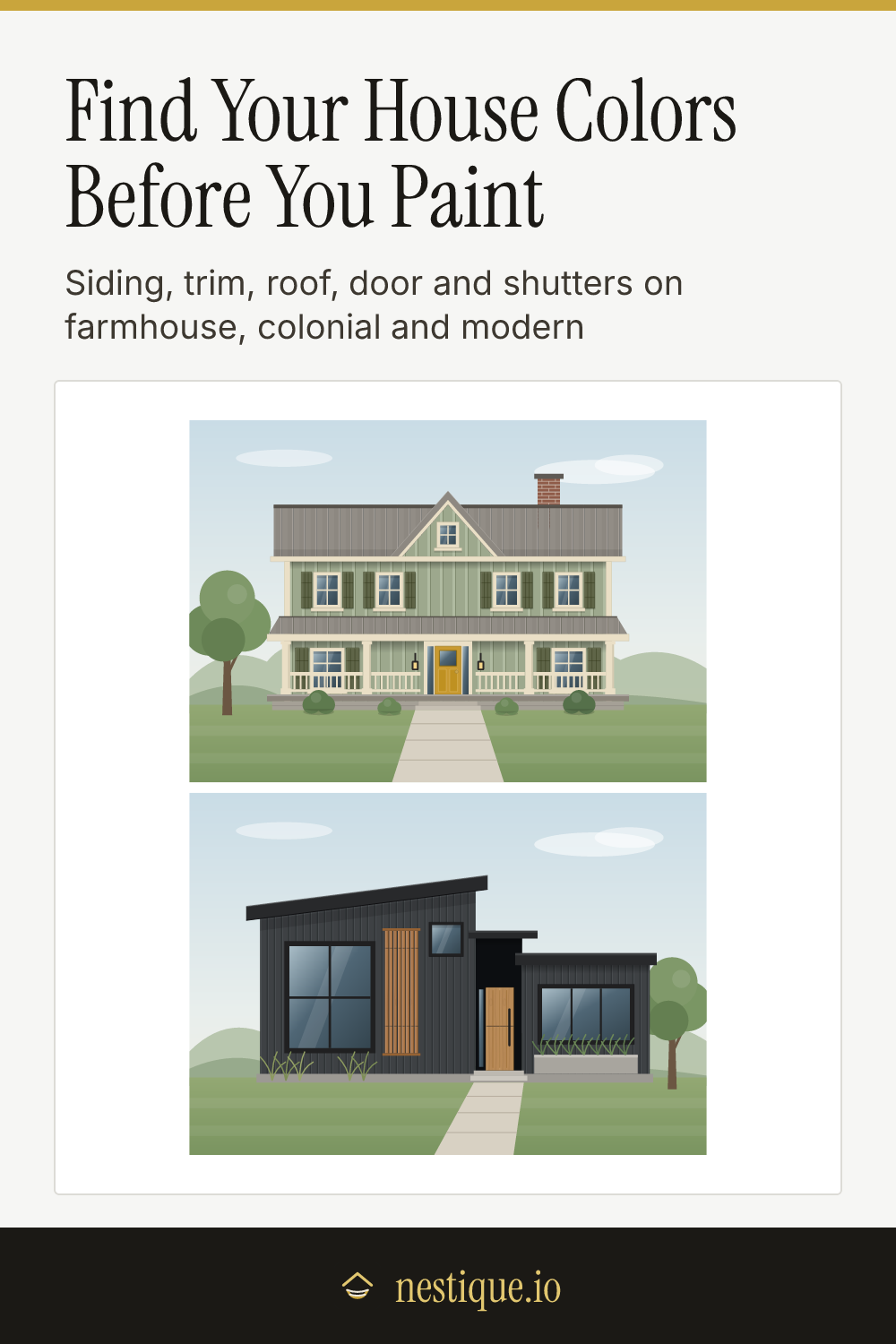
First, pick the house style closest to yours: a farmhouse with a front porch, a two-story colonial, or a modern house. Each one opens on a scheme that suits it.
Next, try a scheme from the row of presets, or build your own:
- Tap a part of the house picture, or pick it from the buttons under it: siding, trim, roof, front door or shutters. On the modern house, the shutters are a slatted wood screen.
- Tap a swatch. The house updates straight away.
- Read the panel under the swatches. It names the scheme, says whether it is balanced, and lists what works and what to check.
The table under the tool shows how light each part reads. Save the house as an image to compare schemes side by side or to show your painter.
The rules behind the hints
Three colors. A classic exterior has a body color for the siding, a trim color and one accent, usually the front door. Whites, grays and blacks count together as one neutral, and close shades of the same color (sage and olive, navy and slate) count as one. The visualizer flags a front with more than three.
Contrast between siding and trim. Trim that is clearly lighter or darker than the siding outlines the windows and corners. A difference of 30 LRV points reads crisply from the street. Trim that is almost, but not quite, the siding color looks like a mistake. Matching it exactly is a deliberate tone-on-tone look.
The door is the accent. A front door that matches the siding gets lost. Give it the strongest color on the house.
Shutters should show. Shutters the same color as the siding disappear. Most schemes use a shade darker than the siding, the door color or the trim color.
Respect the roof. The roof is the most expensive thing to change. A warm brown or terracotta roof with cool blue-gray siding (or the other way round) can clash, so the visualizer flags a warm-cool split.
Dark siding runs hot. Very dark siding absorbs more sun, so it gets hotter and can fade sooner on sunny walls. Vinyl siding makers limit dark colors for that reason.
Assumptions
The houses are drawings with simple shading, not photos of your home. The sky, lawn, plants, brick, stone foundation and windows stay the same in every scheme. Roofs show as standing-seam metal on the farmhouse and porch, shingles on the colonial and a metal edge on the modern house.
Outdoor light is far brighter than indoor light, so real exterior paint usually looks lighter and less saturated on the house than on the chip. Swatch names are generic, and LRV is estimated from the on-screen color. Paint large samples on the house and look at them in morning and late-afternoon light before you commit.
Worked example
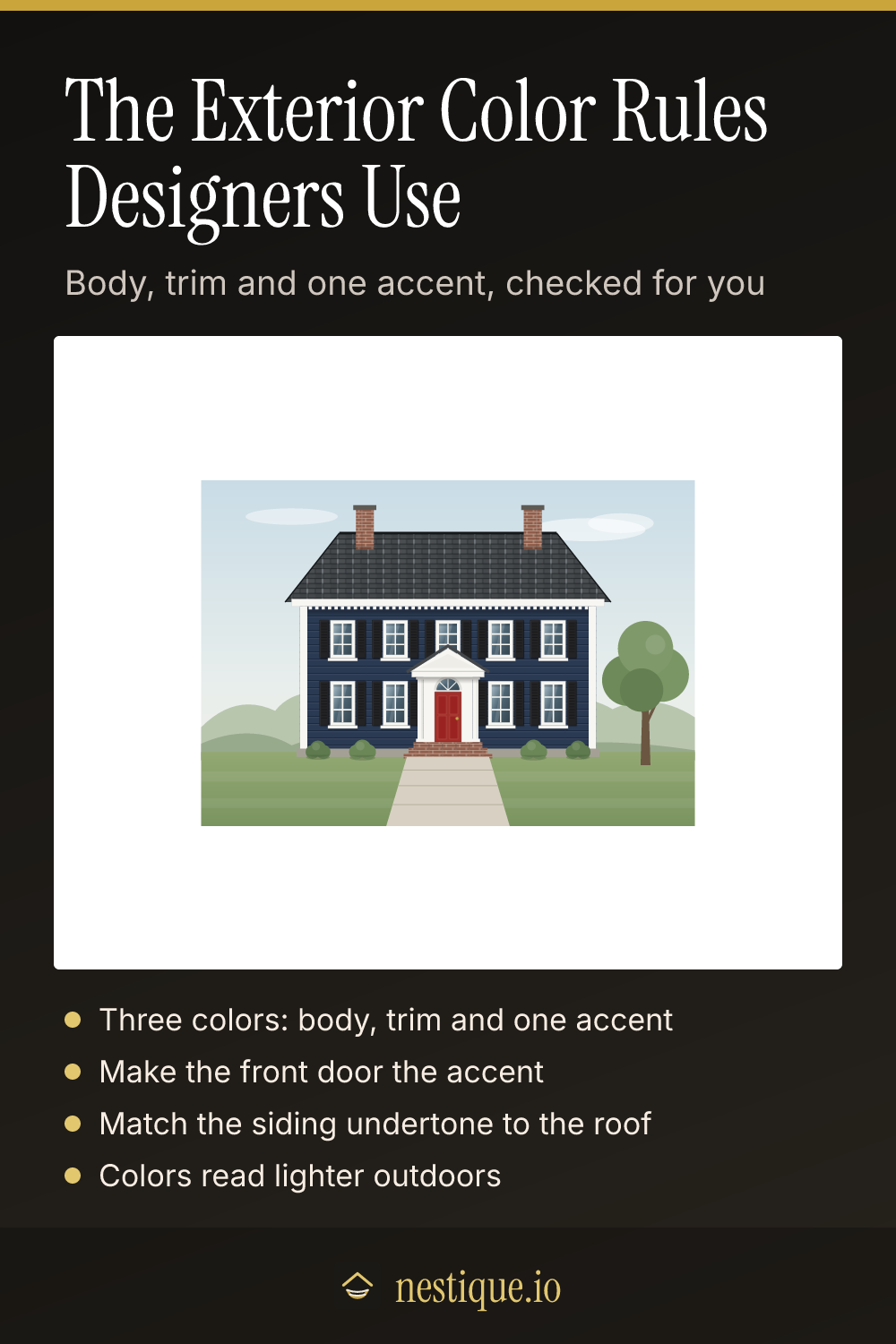
Pick the colonial with the Navy & White scheme: Navy siding, Bright White trim, a Charcoal roof, a Classic Red door and Black shutters.
- The siding’s LRV is about 4 and the trim’s about 92, so the windows and corners read crisply.
- The red door stands well apart from the navy, so it works as the accent.
- It counts as three colors: navy, red, and the white and black neutrals.
- Because the siding is very dark, the visualizer adds a note about heat and fading.
Now change the shutters to Deep Teal. That adds a fourth color, so the verdict changes to “Worth a look” and suggests matching the shutters to the door or the trim. Put the shutters back to black and paint the door Navy instead: the door now matches the siding and the entry gets lost, which is flagged too.
Pin it for later
Exterior House Color Visualizer FAQ
How do I choose exterior house colors?
Start with what you cannot change: the roof, any brick or stone, and the neighborhood. Pick a siding color whose undertone suits the roof, then a trim color clearly lighter or darker than the siding, then one accent for the front door. Test large samples on the house and look at them in morning and afternoon light.
How many colors should a house exterior have?
Three is the classic recipe: a body color for the siding, a trim color and one accent for the front door. Shutters usually match the door, the trim or a deeper shade of the siding. The roof is the fixed fourth color the scheme works around.
What color front door goes with a white house?
Almost anything, which makes a white house a good place for a bold door. Black is the most classic, red and deep teal are cheerful, and natural wood adds warmth. Repeat the door color nowhere else, so it stays the focal point.
Should shutters be darker than the house?
Usually, yes. Shutters darker than the siding frame the windows and read clearly from the street. Shutters that match the siding disappear, and shutters lighter than the siding can work on a dark house.
Do paint colors look different outside?
Yes. Daylight is far brighter than indoor light, so exterior colors usually look lighter and less saturated on the house than on the chip. Many painters pick a shade or two darker than the color they want to see.